Showing posts with label #FreshlyBlogged. Show all posts

Tuesday, September 10, 2013

Of Food Blogging and Chocolate Sauce

The rose in my herb garden, just because
Since I was chopped from the Freshly Blogged competition I haven’t posted a recipe here at all. Partly because I relapsed into cooking old favourites after all the adrenaline of coming up with something new and fabulous every single weekend for six weeks. But there is also that element of failing self-confidence that inevitably creeps up on you when you ‘’lose”. Self-doubt – am I really a food blogger? Am I good enough... all that niggling inner voice stuff that is the enemy of creativity. I was starting to second-guess myself – would it be revealing my lack of real food blogger-ness if I shared my latest exciting discovery of a really simple way of making chocolate sauce? Surely I should already have known how to do that if I was worth my Khoisan sea salt?

But then I go back to the basics of what a blog is. It’s a personal space to write about anything in the world you choose. There are no qualifications needed, no job description, no rules. People are free to read or not read.

I take issue with the tweet I read in the course of the Freshly Blogged competition along the lines of “how irritating my friends in the food industry find food bloggers who’ve had no formal training.” How crass, arrogant and just plain stupid. Of course there are food bloggers who are trained chefs. But most of us become food bloggers because we like food. We have other day jobs and write about our kitchen triumphs and disasters for fun.Not all food writers are chefs, not all chefs can write.

The last thing in the world I’d want to do would be to work as a chef – I’d freak out working amid all the stress of a restaurant kitchen. I’d not enjoy catering for 300 people at an event either. But give me a festival with 40 people to make soup, quiche and puddings for and I’m quite happy, or a Sunday roast for 12. I’m a home cook and that’s what I share on my blog.

A blog is about finding your own voice and staying true to it – the minute you try to conform to someone else’s rules or expectations you lose that spark of individuality that is what blogging is all about, on any subject. And to that anonymous tweeter – Nigella Lawson had no formal chef training -  she started out as a writer who loves food, and that is why I love her books, because they are enjoyable to read and written for home cooks, without a soupcon of cheffiness.

I hope that all my fellow honourable society of the Freshly Chopped are emerging from the frenzied whirl of competition and settling back into their own blog pace and rhythm. One of the up-sides of taking part in the competition was the fun of getting to know and chat with many other bloggers, the camaraderie and proof that the world of food blogging doesn’t have to be stabbing everyone else in the back with kitchen knives at dawn, but about friendly support and cheering each other on. And so good luck to the last nine bloggers who have just completed their last challenge of the competition.

And now for that chocolate sauce.


I made profiteroles a few months ago for the first time and was beset by set-backs and hiccups, one of which was my chocolate sauce cooling all lumpy and not sensuously glossy as it should be. I didn’t attempt profiteroles again until last week, because I knew that my dodgy kitchen scales were one reason for the initial choux pastry disaster. But then my birthday brought forth a zooty new set of digital scales, fetched all the way from Yuppiechef by my kind husband. This time with the to- the-last-gram accuracy of my new scales the choux pastry worked perfectly. I made the crème patissiere without any hassle whatsoever. And I went back to basics for the chocolate sauce and it was perfect.

So just in case you haven’t yet got your own favourite way of making chocolate sauce, I’m sharing my not-at-all-secret method. It’s too basic to be a recipe but here we go.


Chocolate sauce
100g of dark chocolate
60 ml water

Over a low heat, melt the chocolate in the water, stirring continuously.

That is it, instant chocolate sauce, as dark and rich as the chocolate you use to make it. (I used half Lindt 70% and half a cheaper non-specific, not quite so dark chocolate).

Allow to cool slightly before pouring over whatever delectable dessert you choose.

And if after a few hours it cools to a semi-solid goo, just add a dash more boiling water, heat a little and stir it back to a sauce consistency.

I had some sauce left over after our profiteroles and it made a wonderful soft chocolate spread to indulge in on crusty white bread.

If you are hankering after a chocolate sauce and don’t have any chocolate in the house, but do have some good cocoa (and let’s face it Nomu cocoa is an indispensable pantry item for any chocoholic), try making my chocolate avo parfait and instead of freezing it, use it as a sauce. It’s different but just as decadently chocolatey!

Monday, August 12, 2013

A Spicy Chocolate Meringue Intrigue


A light and chewy cinnamon meringue with a luscious splodge of white chocolate cinnamon cream, bound together with fine ribbons of chilli chocolate and of course a strawberry perched on top for a burst of contrasting freshness and acidity. I loved the combinations, as the burst of fire from the chocolate melted into the chewy delicate meringue. You could also make smaller meringues and sandwich them together with the chocolate cream.

The why behind using cayenne in a dessert? This was the other half of the Robertsons challenge for Freshly Blogged: we had to use cinnamon and cayenne in both a sweet and a savoury dish and the sweet one had to include white chocolate. Having a whole load of egg whites left after the Amarula ice cream of the previous week, and because I thought meringues would be the perfect foil for the warm spices, this is what I came up with.

One word of warning – white chocolate can be a tricky thing to work with. Mine was perfect one minute as I was beating it and then the next instant had turned to a bowlful of lumpy curdled mush. I managed to rescue it, by warming a spoonful with some more cream over a low heat and gradually beating the rest back in. But rather beat it by hand in the first place, so that you don’t go past the edge of no return – it’ll be less stressful that way, I promise! It will thicken further as it cools completely.

Yes there was a little tearing of hair out and cursing in my kitchen... and I heard from several other bloggers that they also had near disasters with their chocolate, so don’t worry if it happens to you! Living way too far from the shops to nip out and get more white chocolate I had to find a way of reclaiming mine, and luckily it worked really well and restored my chocolate cream to appropriately luscious creaminess.

Here is my recipe written up for the challenge:


Chocolate Meringue Intrigue

White chocolate is a natural partner with cinnamon, but I also wanted dark chocolate to hold the fierce heat of the cayenne in the dessert. So I came up with silky cinnamon meringues topped with a white chocolate cinnamon cream and swirled with the spicy warmth of dark chilli chocolate, balanced by the freshness of strawberries – a melt in the mouth intrigue of spice, chocolate and sweetness.

Cinnamon Meringues
4 large egg whites at room temperature
200g caster sugar
40g soft brown sugar
1 tsp Robertsons cinnamon
Pinch cream of tartar
Strawberries

White chocolate cream
80g white chocolate
250ml cream
½ tsp cinnamon

Chilli chocolate
60g dark chocolate (Lindt 70%)
1 tablespoon butter
1/8 tsp Robertsons cayenne
½ tsp Robertsons cinnamon

Cinnamon Meringues
Preheat oven to 150C
Sift together sugars, spice and cream of tartar.
Whisk egg whites to firm peaks.
Add sugar mixture one tablespoon at a time, whisking until it is incorporated. The meringue should be glossy and form peaks.
Spoon mixture in heaps onto two trays lined with baking paper.
Makes 12 large meringues.
Bake for 45-50 minutes until firm. Switch off heat and leave to cool in the oven.


White chocolate cream
Melt the chocolate in a double boiler. Allow to cool. Stir in cream and cinnamon. Whisk by hand until the mixture thickens (beware, If over beaten it separates). It thickens further when cooled completely.

Chilli chocolate swirl
Melt dark chocolate with butter in a double boiler. Stir in the spices. Allow to cool but use within the hour as it will set hard.

Assemble the meringues
Spoon a generous dollop of white chocolate cream on top of each meringue. Place half a strawberry on top. Swirl with the dark chocolate in spiral ribbons. These can be assembled a few hours in advance or eaten straight away.

This is the other half of the last challenge that I made for the Freshly Blogged competition. My Hot Tuscan Crostini I’ve already posted about.

Adieu Freshly Blogged. It was fun while it lasted and good luck to the rest of the fab food blogging contestants!


Sunday, August 11, 2013

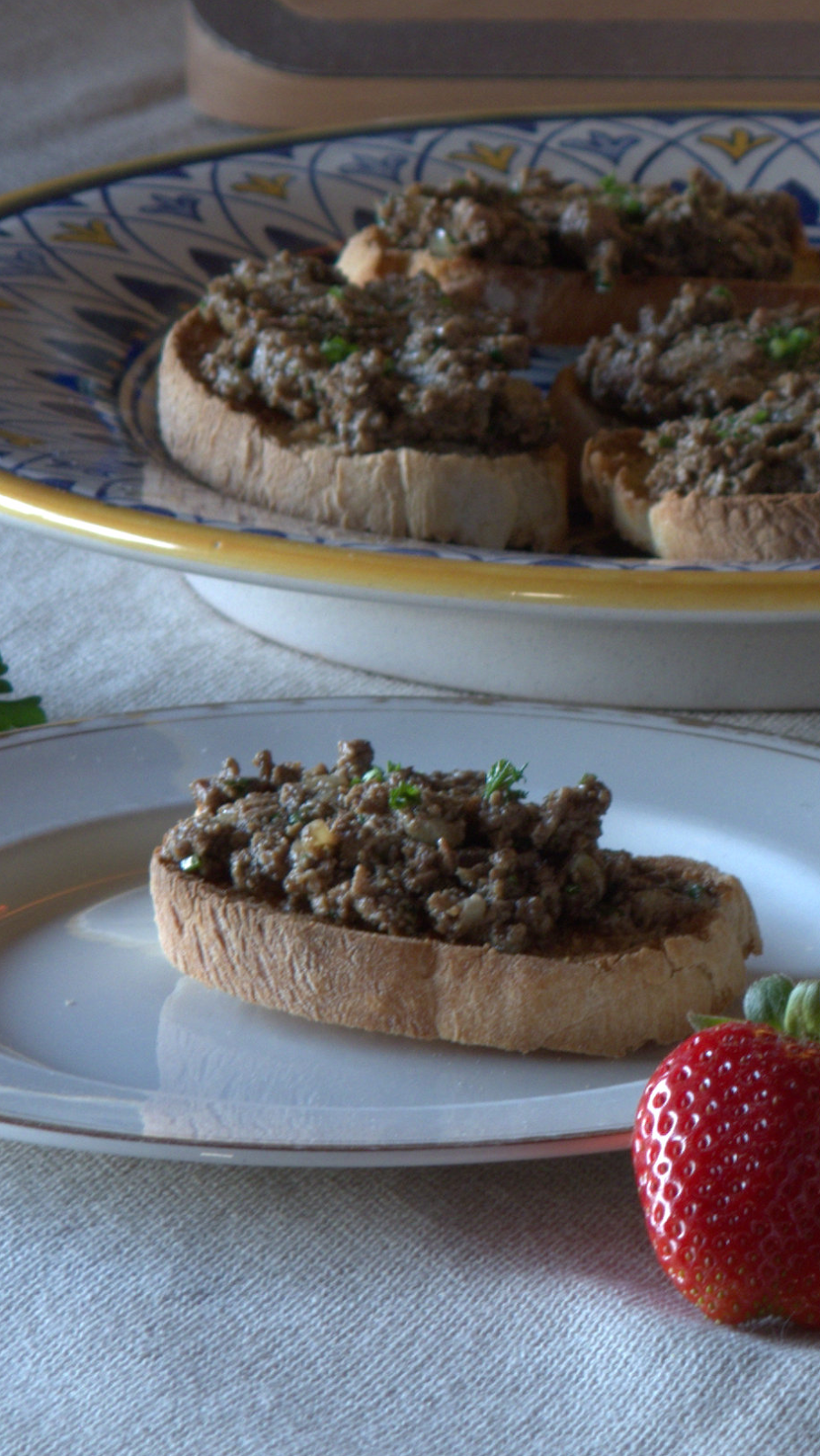
Hot Tuscan Crostini or Finely Chopped

If you’ve been following  my blog you may have noticed that I’ve been somewhat caught up in the Freshly Blogged challenge for the last six weeks. Every week a new list of ingredients, every week a shopping treasure hunt to find the requisite ingredients in my local PnP, every week a new recipe to devise, write up and photograph. Well last Monday I got chopped, but I’d already cooked and photographed that week’s challenge. So never one to waste a perfectly good recipe I’m going to share it with you anyway.

My husband says he has his wife back. . I have to admit that it did get to be a rather all-consuming, obsessive, adrenaline rush, waking up on weekend mornings way too early, head buzzing with ideas. In fact it pretty much took over the last six weekends, so now I’m over the initial disappointment and chagrin, it’s quite nice to have an empty weekend stretching ahead. Perhaps a chance to fill those yawningly empty rusk and biscuit tins, to take pictures of the spring flowers, play with the puppy... and chill with the family.

So good luck to everyone else who is busy cooking up a storm for the next round. It has been great getting to know so many of the other food bloggers during the challenge and I’ll be cheering you on from the voting sidelines!

Now for my final recipes. Our challenge was slightly bizarre at first sight. Sponsored by Robertsons, we had cinnamon and cayenne on the list, plus chicken livers, white chocolate and cream. After the initial bewilderment, we read on to see that we had to make two separate dishes, each containing both spices. So a sweet and a savoury both with cayenne and cinnamon. We were allowed three fresh and two grocery ingredients to add to the list.


Predictably many of us were rather suspicious of the chicken livers, never having cooked with them before. But I’d eaten many a chicken liver crostino in Tuscany over the years, and although  that was hardly the most original dish to choose, I reckoned I would go with something that I had a fair chance of convincing my family to eat.

While the traditional Tuscan chicken liver pate is usually flavoured with sage, sometimes with the addition of chopped mushrooms or capers, for the challenge I used the spices we were given instead, together with some parsley, and the combination worked very well, with  the spices complemetning the earthy notes of the livers. Two out of three kids ( you don’t think I’d get our son to even taste these, do you?) really liked them and I’d definitely make them again for an Italian-themed dinner. Because of the challenge, I had to make my own bread from the pantry ingredients, but unless you are already baking a batch of bread I’d recommend just buying a long French loaf. No need to make life harder for yourself unless you want to!

Here is my recipe:


Hot Tuscan Crostini

Chicken livers on the ingredients list took me back twenty years to family trattorias in Tuscany, where one of the classic antipasti was a plate of crostini with a variety of toppings. Rich, deep and earthy, the traditional Tuscan chicken liver paté piled generously on toasted bread is one of those taste memories that remain firmly etched. I wondered if it would be as good with the spicy notes of Robertsons cayenne and cinnamon instead of the more usual sage. It was even better, and two out of three kids  even had seconds.

Crostini toasts

500g bread flour
5g instant yeast
1 tsp salt

Chicken liver paté
4 tablespoons finely chopped onion
2 tablespoons olive oil
3 tablespoons finely chopped parsley
1/8 teaspoon Robertsons cayenne
¾ teaspoon Robertsons cinnamon
250g chicken livers cleaned and roughly chopped
3 tablespoons dry white wine
2 teaspoons flour
1 tablespoon butter
Parsley to garnish

Crostini toasts
Make your own crostini bread (or buy a baguette!). Mix flour and salt. Add yeast. Mix to a dough with about 1 ½ cups of lukewarm water. Knead for 10 minutes. Leave to rise until doubled in size.  Knock down and form into two long thin ‘baguette’ loaves. Leave to rise. Bake at 200C for 20-25 minutes. Cool. Slice into 1 cm slices. Toast under the grill on both sides until golden and crispy.


Chicken Liver Pate
Cook the onion in the olive oil until soft. Add 1 tablespoon of parsley and the spices. Cook stirring for 1 minute. Add the chopped livers. Stir until starting to colour. Add 1 tablespoon wine. Cook stirring for three minutes. Remove from heat. Mince liver to a coarse paste with a chopping knife on a board (a food processor makes it too smooth). Return to pan with 1 tablespoon each of parsley and white wine. Cook stirring for another 2-3 minutes. Moisten again with 1 tablespoon white wine. Add the flour and stir for another minute until flour is cooked and liquid evaporated. Add butter and rest of parsley and stir it in, then remove from heat.


Assemble crostini
Just before serving spread or heap a generous tablespoon of paté onto each toast and garnish with parsley. Can be served hot, warm or room temperature, as a mixed antipasto with other crostini and a few olives.

I will give the recipe for the sweet dish that I made as the other half of the challenge in a separate post...


Look out on Monday for everyone else’s dishes and vote for the one you think looks and sounds most delicious.

Monday, August 05, 2013

Chocolate Pear Tarts with Amarula Ice Cream

After the challenge of cooking with mealie meal and pilchards of the previous two weeks, last week’s Freshly Blogged ingredient list was a joy to read through. Who wouldn’t be happy to cook with Amarula, dark chocolate, almonds  and pears? But in a way this made it all the harder – how to decide on just one dish with so many mouth-watering possibilities beckoning. One proviso was that we had to make a custard as part of the dish. With that thought, my (and many others’) mind turned to ice cream, skipping over profiteroles and upside-down cakes and picturing an exquisite piece of layered French patisserie with a luscious blob of Amarula ice cream.

At this point reality set in. The weekend already involved cooking a Sunday lunch for 12 to celebrate my husband’s birthday and we were spending Saturday out on an excursion to Noordhoek (the other side of the world from us, tucked behind Table Mountain) to meet a puppy that we hoped would be joining the family. I down-scaled my pastry-cook ambitions to something that would fit in with Sunday lunch. It had to be easy and made in advance, as the oven would be groaning with two legs of lamb and trays of roast potatoes. But it also had to be scrumptious and celebratory to fit the birthday occasion.

I had a brainwave – why not make individual versions of this awesome chocolate tart and use the pears in the tart, to create a home-spun pastry re-working of pears in chocolate sauce. In the end I made the ice-cream and the pastry the night before, poached the pears and made the chocolate tarts first thing in the morning and snatched 10 minutes to photograph them for the challenge once the roast was safely into the oven and before our guests arrived.


Both the tarts and the Amarula ice-cream were a big hit, in fact I ‘d go so far as to recommend making a batch or three of the ice-cream to keep in the freezer for emergencies all year round, but especially for Christmas – there is something about its rich creaminess that spells luxury, comfort and sheer deliciousness.

I can hear my non-South African friends screaming at me in frustration, wanting to know what on earth is Amarula? It's a rich creamy liqueur made from the fruit of the Marula tree, nothing like Baileys but with that genre of creaminess and alcoholic kick. Here's Cooksister's explanation of Amarula.

Once again, if you’d like to vote for this recipe in the Freshly Blogged challenge, I’d be very grateful. And go and see what everyone else made – I think there are several more versions of Amarula ice cream to be found out there!

Edited to add: Unfortunately, however lovely I think it is, this recipe wasn't enough to keep me in the competition - I got chopped today along with two others... so you've only got my spice, chicken liver and white chocolate recipes (don't worry, two separate dishes!) to look forward to!

My recipe as posted for the competition:


Chocolate Pear Tarts with Amarula Ice Cream

Chocolate, Amarula, pears and almonds, this week’s ingredients list sent me swirling off in visions of elegant French patisserie... until reality and practicality kicked in. I was already cooking a Sunday lunch for 12 and wanted a delicious dessert that wasn’t too fiddly. Perhaps with a more rustic patisserie feel that wouldn’t demand any last-minute fancy footwork. One which would wow kids and adults without me tearing my hair out just as the guests arrived. I decided to interpret the custard element as a lusciously sophisticated Amarula ice-cream, which I could make in advance. The pears would sit snugly in a bed of rich chocolate individual tarts, with the pear heart shapes adding a quirky touch of visual interest. The toasted almonds scattered on top give an extra textural crunch and contrasting depth of flavour. A definite wow with both kids and adults... one to add to the Christmas dessert list!

Ingredients

Amarula Ice cream
6 egg yolks
100 g caster sugar
250ml milk
250ml cream
200ml Amarula

Easy Sweet Pastry
120g cake flour
30g icing sugar
80g butter
1 egg yolk
Pinch salt
Iced water to mix

Chocolate pear tart
4 pears
1 cup water
80ml white sugar
80g dark chocolate
125ml cream
1 egg beaten
50g blanched almonds


Method
Amarula Ice cream
Beat egg yolks with sugar until pale and fluffy. Heat cream, milk and Amarula, until almost simmering. Do not let boil. Pour cream mixture over eggs, whisking. Put into a double boiler (or a bowl over a simmering pot of water). Cook stirring continuously until the mixture has thickened to a pouring custard. Cool, stirring occasionally to avoid skin forming. Freeze for at least 8 hours. This worked without an ice-cream maker, beating once after 2 hours in the freezer.

Easy Sweet Pastry
Sift together flour and sugar. Add butter cut into small cubes. Chill in freezer for 10 minutes. Beat egg with salt and a little iced water. Put flour and butter into food processor and blitz to breadcrumb consistency. Add egg and blitz. Add just enough iced water to bring together in a soft dough. Wrap pastry and chill for ½ hour. Roll out on floured board to 2mm. Cut 12 circles to fit a muffin tin and line tin with them. No need to blind bake, it works better without.

Chocolate pear tart
Pre-heat oven to 180C.

Peel pears. Cut into quarters and remove cores. (If your pears are very ripe and juicy you won’t need to poach them, so omit next step)

Boil together sugar and water for 2 minutes to make a thin syrup. Put pear quarters in and simmer gently for 5 minutes until starting to soften. Cool in syrup.
Cut each quarter in half and fashion into rough/rustic heart shapes with the outer curve of pear upwards

Break chocolate into small pieces in a bowl. Heat cream to simmering point. Pour over chocolate. Stir until melted and smooth. Stir a little chocolate mixture into egg, then mix egg into the chocolate and stir well.

Put whole almonds into a bag and crush roughly with a rolling pin into uneven pieces and chunks. Toast in the oven for 5 minutes until golden. Cool.


Assemble the tarts
Put a tablespoon of chocolate mixture into base of each tart. Put one piece of pear into each, heart shaped outer curve upwards. Carefully spoon chocolate mixture around pear.  Don’t fill  cases right to top, as pastry shrinks a little as it cooks.
Bake for 20 minutes until pastry is golden and chocolate custard is lightly set. Cool in tin for 2 minutes before removing carefully onto cooling rack.

Serve two tarts with a generous scoop of Amarula ice cream. Sprinkle toasted almonds lavishly over ice cream.

Serves 6
Prep time 1 hour
Total time 8 hours

Please go and see and vote for my recipe here on the Freshly Blogged site. Voting is open until 11am Monday 12th August.


Another extra challenge, for this particular challenge, was resisting the appeal of playing with our new puppy, George, who did decide to come and join our family the day before. We've had him a week now and he's settling in well, playing with Bracken, the kitten and trying to persuade the older dogs to tussle and romp.

Monday, July 29, 2013

Creamy feta fish cakes on buttered cabbage

These pilchard fish cakes were the surprise hit of the Freshly Blogged competition so far with my family. A surprise because I’d never served them pilchards before and never would have thought the kids would eat them. I think the image problem is to do with the name – ‘pilchard’ just doesn’t sound very appetising – it’s not until you realise that they are actually just big sardines that you can start to get enthusiastic about them. Or maybe that’s just me?!

I’d been thinking about making fishcakes recently anyway, but hadn’t got around to it, so this was a great opportunity to experiment. They worked out so beautifully that they are going to be on the family recipe list from now on – a brilliant way of making a meal that tastes luxurious, rich and creamy, but is actually very cheap to make... and it can be one of those emergency store-cupboard meals for those times when you haven’t been shopping for a week and feel like something more than just pasta again.

And cabbage is another humdrum vegetable that too often gets a bad name served boiled into oblivion. Here it is gently braised with butter until soft and sweet with plenty of black pepper as a foil, and it is a whole other food stuff that you might even persuade kids to like!

The challenge ingredients this week were: Lucky Star pilchards, cabbage, brown rice, green beans, feta: They are all quite humble ingredients that conjure up 50s Britain for me, a culinary desert according to many, but also a time of traditional nursery comfort food, which when done well is delicious. Done badly and featuring as school dinners... well that’s another story! Luckily these turned out unlike any school meals that I can remember.
We could add two fresh ingredients (I went for lemon and parsley) and any spices.

Please go and see and vote for my recipe here on the Freshly Blogged site. Voting is open until 11am Monday 5th August.

The recipe and inspiration as posted for the competition follow:

Creamy feta fish cakes on buttered cabbage

Pilchards may be a store-cupboard staple, but too often they sit on the back of the shelf, ignored and waiting in vain for a chance to shine. These fish cakes are that chance, giving them a starring role that will certainly have me buying them regularly now, in fact my husband liked them so much that he insists on it!

The fish cakes are inspired by the best of British comfort food; think of all those once exclusively nursery dishes that have been re-invented as gastro-pub favourites. These are made with rice rather than the more usual mashed potato and flavoured simply with parsley and lemon zest, to complement the richness of the oily fish, a surprise creaminess added by melting feta. Cabbage braised in butter (and oh so sweet) seems to go down well even with kids who don’t usually touch the stuff, and then there is the fresh lemony crispness of a green bean salad to round everything off.

This is an incredibly economical and delicious meal that you could serve up to royalty and make them very happy!


Ingredients
Fish cakes
1 cup PnP brown rice
2 ½ cups vegetable stock
1 tin Lucky Star pilchards in tomato sauce
Zest of 1 large lemon
6 tablespoons finely chopped parsley
100g PnP feta cheese
1 egg, beaten
3 tablespoons flour and more to coat
Salt and pepper
Vegetable oil for frying

Green bean salad
500 g green beans topped, tailed and halved
2-3 tablespoons lemon juice
1 tablespoon finely chopped parsley
50g PnP feta cheese

Buttered cabbage
1 medium  cabbage
30g butter
3 tablespoons water
Salt and pepper

Method
Fish cakes
Cook the rice in the stock in a covered pan, until all the liquid is absorbed and the rice is tender but still retains a slight bite. Spread on a plate to cool.
Break the pilchards into fairly small pieces, removing any spine cartilage as you go. Put aside the excess sauce from the tin.
Break the feta into small pieces.
Once the rice is fairly cool, mix in the lemon zest, parsley, feta and pilchards. Check the seasoning and add salt and pepper to taste.
Add the beaten egg and 3 tablespoons of flour and mix gently. Form the mixture into patties and dip into the extra flour to coat them on both sides. At this stage the patties fall apart very easily so handle them carefully. Makes about  10.
Put the fish cakes in the fridge to firm up until everything else is ready.


Heat enough oil to cover the base of a frying pan. Gently slide in as many cakes as will fit without crowding. Leave to cook for 2-3 minutes until a crust has formed underneath. Turn very carefully and cook on the other side for another 2-3 minutes. Remove onto a warm plate covered with kitchen paper, while you cook the next batch. Serve hot.


Green bean salad
Bring a pot of salted water to the boil. Add the prepared green beans. Cook until al dente, tender enough to bite through but still crisp. Drain and cool under cold tap for a few seconds. Put them in a bowl and sprinkle with lemon juice. Season with salt and pepper. Just before serving add crumbled feta cheese and finely chopped parsley.


Buttered cabbage
Shred the cabbage into fine strips. Put it into a heavy based pot with a lid. Add the water and butter. Season with salt and pepper. Bring to a simmer. Cover and cook for 20-25 minutes, stirring occasionally. During the last five minutes, remove the lid so that the last of the water boils away. The cabbage should be tender and buttery, with no excess liquid.

If you like the sound of this recipe you can vote for it on the Freshly Blogged site until Monday 5th August...thanks so much for your support! xx


Tuesday, July 23, 2013

Fruity Mieliepap Muffins for Freshly Blogged

I was really excited to see waterblommetjies on the ingredients list for Week 3s challenge; slightly more intimidated by the mielie meal (corn meal). Waterblommetjies are a winter delicacy local to the Western Cape. Usually served as part of a lamb stew they are strange looking flower buds from a pond growing plant. In taste they are somewhere between a green bean and an artichoke, best with plenty of lemon  and not cooked to a mush!

Mielie pap (a thick cornmeal porridge) is such a traditional staple in South Africa that I’m slightly ashamed that I’d never even eaten it before, let alone cooked it! It’s served with stews, braais and simply with tomato sauces and relishes. A bit like Italian polenta, except white rather than golden, it can also be cooked, cooled and then sliced and fried. Seeing as my family hasn’t grown up eating pap, I thought I’d try to make it more interesting by turning it into filled savoury muffins to go with the braai.

Our ingredients list was: Drostdy-Hof Pinotage, ostrich sausage, mealie meal, waterblommetjies, PnP chutney, mixed dried fruit.  We were allowed to add three fresh ingredients and three spices and part of the dish had to be cooked on a fire.

Waterblommetjies, raw and steamed

I hit a major stumbling block when my local PicknPay had neither the ostrich nor the waterblommetjies. The nearest alternative PicknPay was 50km away, and my first solution, to source them elsewhere in town, wasn’t allowed – for the competition all the ingredients have to come from PnP.  Some major tweeting went on, quite a bit of tearing out of hair at the last minute. Eventually I adapted my original ideas, omitted the sausage altogether, substituted the waterblommetjies with green beans (one substitution is allowed if ingredients are unavailable) and made my dish an accompaniment to a braai rather than a complete meal. Though of course it is substantial enough  to make a full meal if, for example, you have vegetarians coming to your braai!

Another hitch was that my experienced braai-master husband was sick in bed, so I had to rely on our son to look after the fire while I ran back and forwards between mielie pap muffins in the oven and the bredie on the coals. He was also cooking the sausage, sourced elsewhere, even though that wouldn’t make it into the competition recipe.


The green bean bredie (stew) was very tasty and would have been even better with the waterblommetjies and their slightly deeper flavour. The mielie pap muffins were a hit with a few of the family and a miss with others. I liked the contrast of the rich spicy fruit filling with the light starchiness of the pap, and the golden crust from the baking added to the appeal.

My recipe on the Freshly Blogged site is here – please go and vote if you’d like to! I’m hoping to keep my place respectably in the middle of the list! The recipe as posted for the competition is below.


Fruity Mieliepap Muffins and Green Bean Bredie

The Drostdy Hof claret is one we regularly use  for mulled wine, spicing it with cloves, cinnamon and nutmeg for our winter festivals. The dried fruit on the list inspired me to combine the aromas of spiced wine with the fruit as a sweet/savoury relish. Turning my mind to the mealie meal I wondered if I could jazz it up a little. The result was these fruity mieliepap muffins, with a wine spiced fruit centre. I made half the muffins with the fruit filling and the other half filled with chutney, so that each person gets one of each. Served as an accompaniment to a braai, alongside a tasty green bean bredie, they add plenty of interest to rich meats and soak up the braai juices beautifully. Waterblommetjies would work equally well in the bredie if you can get them.

Ingredients
Dried fruit wine relish
250g PnP dried fruit
1 cup Drostdy Hof claret
2 sticks cinnamon
5 cloves
10 coriander seeds
10 whole peppercorns

Mieliepap muffins
1 litre water
1 teaspoon salt
2 cups mealie meal
½ cup flour
1 egg
25g butter
1 teaspoon ground coriander
Salt and pepper
PnP Chutney
Dried fruit relish

Green bean bredie
3 tablespoons olive oil
2 onions, sliced
2 teaspoons brown sugar
1 teaspoon ground coriander
3 tomatoes, diced
3 potatoes, peeled and cubed
1 cup stock
Salt and pepper
500g green beans, topped and tailed

Method
Dried fruit relish
Put the dried fruit in a small pan with the wine and spices. Bring to a gentle simmer. Cook gently for 20-30 minutes until the fruit is tender. Remove from heat and leave to cool.
Once cool remove whole spices. Take the fruit out of the liquid. Chop into small pieces and keep covered until ready to use.

Mieliepap muffins
Bring the water to a gentle simmer. Add salt.
Pour the mealie meal into the boiling water in a thin, steady  trickle, stirring all the time.
Keep stirring over the heat until the pap is thick and coming away from the sides of the pan. Remove from heat. Cover and leave to steam for 5 minutes.
Allow to cool for half an hour or so.
Preheat the oven to 190C.
Line a 12 muffin tin with squares of greaseproof paper or muffin cases.
Stir in the flour, butter, beaten egg, salt pepper and coriander. Mix to a soft dough.
Fill each case to halfway mark with mixture. Press in gently, leaving a hollow for the filling.
Put a generous heaped  teaspoon of fruit relish in half of the bases and the same quantity of chutney in the others.


Dollop the rest of the mixture onto the tops of the muffins, pressing carefully around the edges to seal in the fillings.
Bake for 40-45 minutes until the tops are almost golden.  Allow to stand for at least 10 minutes before serving.
Serve warm.


Green bean bredie
Put olive oil into a potjie pot or cast iron casserole over glowing braai coals. Add the onions and cook stirring often until they are softening. Add sugar and spice and cook until the onions are starting to caramelise slightly. Add tomatoes and cook for another 5-10 minutes. Add potatoes and stock. Cover and cook until the potatoes are still firm but tender. Add the beans. Continue cooking covered until l the beans are tender but still retain some bite.
Serve to accompany boerewors, ostrich sausage or chops, or as a vegetarian braai dish.


Serves 6 as an accompaniment to a braai
Prep time 25 minutes
Total time 1hr15min


Voting on this challenge is open until Monday 29th at 11 am. The recipe with the most votes wins a  Salton hamper but the judges decide who goes through to the next round based on the first three challenges.

Vote for this recipe and there is a Drostdy Hof hamper for one lucky voter.

My phyllo spring rolls for week 1.
My aromatic beef pie for week 2..

Monday, July 15, 2013

Aromatic Beef Pie Recipe

Week 2's Freshly Blogged challenge had many of us in a twitter . Of a generation that has never cooked with suet and grew up to regard any saturated animal fat with deep suspicion, it was a mystery. Even though my classic English cookery books have whole sections on suet puddings, I’ve never been tempted to try them out and had no idea where even to buy suet in South Africa.

In England I know you can buy packets of ready shredded, more anonymous suet, that doesn’t look like what it is – great lumps of fat taken from around the kidneys of the cow. After a long phone conversation with the friendly butcher at our local PicknPay, I managed to establish that we were talking about the same thing (his English and my non-existent Afrikaans didn’t quite stretch to the right vocab for suet) and I went in to collect it, great curvy lumps of white fat encased in a membrane. It was incredibly cheap, so not hard to see why it was a staple of those frugal English cooks of yesteryear.

Grating suet
The rest of the ingredients for the challenge were: a Knorr beef stockpot, 500g beef shin, a PnP soup pack of vegetables, star anise and white wine vinegar. We could add two fresh and one grocery ingredient and omit one ingredient from the list. I don’t know what you would have made, but I went straight for the perhaps rather obvious but delicious traditional beef stew with a lovely thick and light suet crust. The twist being the star anise.

I had no idea how the star anise flavour would work with the stew but hoped for the best. I added onions and bay leaves as my fresh and red wine as my grocery ingredient and left out the vinegar. And it worked amazingly well giving a rich and aromatic stew that the whole family ate and would happily eat again. Star anise is my new essential spice!

If you feel inspired to vote in the challenge here is my recipe on the Freshly Blogged site. And the recipe as posted follows here:


Aromatic Beef Pie Recipe
I’ve never cooked with suet before, but the English culinary and literary heritage is full of old-fashioned recipes that use suet: dumplings, steak and kidney pudding, jam roly poly pudding and of course Christmas pudding. It took no time to decide on a rich and aromatic beef stew turned into a  pie with a golden suet pastry crust. It would work equally well as individual pot pies or as one big family pie. Star anise isn’t a traditional English stew spice but it adds a mysterious extra aromatic that lifts the beef out of the ordinary without overwhelming the rest of the flavours. I complemented it with bay leaves to give some subtler undertones, and a good slug of red wine for richness.

Ingredients
For beef stew
600g beef shin
4 tablespoons flour
3 tablespoons olive oil
3 onions
1 PnP soup pack: 2 carrots, 1 stick celery, 1 small leek, 1 large tomato, 1 potato
1 tablespoon celery leaves chopped
1 Knorr beef stock pot
½ cup red wine
1 star anise
3 bay leaves
Salt and pepper

For suet crust
350g self-raising flour
175g shredded suet
Salt and pepper
Approx 1 ½ cups cold water to mix
1 egg, beaten

Method
For beef stew
Slice the onions. Peel and chop all the vegetables into bite-sized pieces.
Sift the flour onto a plate and season generously with salt and pepper. Turn the beef pieces in it until lightly coated.
Heat the olive oil in a frying pan and brown the beef in batches until browned on all sides. Remove into a casserole.
Put the chopped onions into the same frying pan and cook until starting to soften. Add the rest of the vegetables and continue cooking for 2 minutes. Add the vegetables to the casserole.
Pour the wine into the frying pan and scrape up any residue. Allow to bubble briefly and then add to the casserole. Add the beef stock pot, star anise, bay leaves and a good seasoning of salt and pepper to the casserole, then add warm water to just cover the meat. Bring to a simmer, cover with the lid and leave simmering very gently for about 3 hours, until the meat is tender and falling off the bones. Stir once or twice during that time to make sure it isn’t sticking or burning.

For crust
If using butchers suet, remove the thin membrane and grate the suet finely.
Sift the flour into a bowl. Add the grated suet and a seasoning of salt and pepper.
Mix well.
Add water a little at a time, until the dough comes together. It should have the consistency of a scone dough, quite soft but holding well together.
Roll out the suet dough on a lightly floured surface until it is about 1 cm thick and about 1 cm wider all round than the pie dish you will be using.
Note: Make the dough just before you are ready to bake the pie. It shouldn’t wait around long or the raising agent will not work so well.

Assemble the Pie
Remove the bones from the stew and break up the meat into bite-sized pieces. Put all the meat and vegetables into a 1.5 litre pie dish with a rim. The remaining liquid should already be quite thick and rich but if it is too thin you can reduce it now by boiling for a few minutes. Pour the gravy over the meat and vegetables to come just below the rim of the pie dish.
Cut the pie crust to fit the dish. Wet the rim of the dish with water and use the leftover 1 cm edges to make a raised edge around the rim. Carefully lift the rest of the crust onto the top and press down all around the edges to seal. Make a small hole in the top to allow the steam to escape.
Brush the top with beaten egg.
Bake at 190C for 25-30 minutes until the crust is golden and well risen.


Voters in the Freshly Blogged challenge get prizes too. Check out what the voters' prize is this week and then vote for my recipe if you would be so kind. Thanks!

Previous Week's challenge : My phyllo spring rolls recipe

Monday, July 08, 2013

Phyllo Spring Rolls Recipe

This has been a year full of food blogging challenges for me – first the Robertsons Spicemaster cook-off and now Freshly Blogged from PicknPay, where 50 or so bloggers are given a mystery list of ingredients and have to come up with an original recipe. It’s online, it’s over 11 weeks and the last three in compete in a cook-off at Taste of Joburg in September. You get to vote for your favourite recipes at the Freshly Blogged website and there are weekly prizes up for grabs, both for voters and bloggers, but three foodie judges decide who goes through and who is for the chop!

The first challenge had us all madly tweeting over the weekend as we trawled Cape Town’s PicknPay stores for the elusive garlic, ginger and dhania paste. I tracked mine down without too much stress along with the Findus Thai Wok frozen veg, the PnP phyllo pastry, orange and pineapple. We were allowed to omit one ingredient and I dumped the two-minute noodles, which I am deeply suspicious of as a form of nutrition, and added as my one extra ingredient peanuts. These easy phylllo spring rolls were what I came up with.

If you like the sound of them please vote for my recipe on the Freshly Blogged site! The recipe and inspiration as posted for the competition follow:

-----------------------

A palm shaded warung on a family holiday in Bali, serving crisp spring rolls with peanut sauce to dip into. My kids eagerly tucked into what were essentially parcels of exotic vegetables that they’d never even consider eating in any other format. It’s the delicate crispness of the roll that lures them to overlook all that vegetable goodness within.
 So when Thai vegetables and phyllo pastry were the main ingredients of the first Freshly Blogged challenge, it was spring rolls that immediately ‘sprung’ to mind: oven baked in phylllo pastry for easy cooking and with a pineapple and peanut dipping sauce inspired part by sweet/savoury fresh Indian fruit chutneys and part by the more traditional peanut sambals of Indonesia. These spring rolls are a creative (if not very  authentic) interpretation of a holiday memory of those Balinese spring rolls, possibly the only way of convincing my kids to munch through any amount of shredded vegetables. I hope your kids, and adults, will enjoy them too!


Recipe for Phyllo Spring Rolls with Pineapple and PeanutSauce

Ingredients

250g (half pack) of PnP phyllo pastry

For spring rolls
500g Findus Thai Wok frozen vegetables
2-3 teaspoons PnP crushed garlic, ginger and dhania
2 tablespoons vegetable oil
2 tablespoons fresh orange juice
Salt and pepper

For sauce
1 cup chopped fresh pineapple
1/3 cup salted peanuts
1 teaspoon PnP crushed garlic, ginger and dhania
1 ½  teaspoons dark brown sugar
1 teaspoon vegetable oil
Salt and pepper

Makes 12-16 rolls

The night before you plan to cook these, put the frozen phyllo pastry in the fridge to defrost. Take the packet out of the fridge the next morning two hours before you plan to use it to bring to room temperature, otherwise the sheets will stick together..

Make the sauce by putting all the ingredients into a mug and processing with a stick blender until smooth. Check seasoning and adjust to taste.

Heat your wok until piping hot, add the 2 tablespoons oil, it should be just starting to smoke. Put in the garlic, ginger and dhania paste, immediately followed by the frozen vegetables and stir quickly together. Add a squeeze of orange juice and  stir-fry for 5-7 minutes until the vegetables are starting to become tender but still retain some crunch. If there is too much liquid in the bottom of the wok, drain it off. Leave the vegetables to cool before making the spring rolls. Refresh them just before using with another squeeze of orange juice.

Pre-heat the oven to 190C.

Take one roll of pastry from the packet. Unroll it carefully and cut it into three strips of approximately 12 cm wide. Take one piece of pastry and cover the rest. Put a spoonful of cooked vegetables at the narrow end nearest to you. Fold the sides in over the filling by 1 cm and roll up around the filling. Brush with oil to seal at the end and brush the whole roll with a light coating of oil. Place on a baking tray and continue to make the rest of the rolls. If you prefer thicker, more sturdy rolls use two sheets at a time.
Bake for 15 minutes until the edges are golden and the rolls are crisp.
Allow to cool for 5 minutes before serving with the pineapple and peanut sauce to dip.


-----------------

I’m busy creating a recipe for the second Freshly Blogged challenge already, which I’ll post here next week, then I hope to stay in for at least a few more rounds (or even right to the end!) as I’m enjoying the stimulus of coming up with new things every week!

Please vote for this recipe here - I'd very much appreciate it and will love you for ever!

NB for my non-South African readers: dhania is coriander/cilantro.